
How to Avoid Sargassum on a Caribbean Vacation: A Guide to Checking Conditions Before You Book


To reduce the chance of sargassum disrupting a Caribbean vacation, compare conditions at the specific property—not just the destination. Ask for dated photos of the swimming area, check regional monitoring resources, confirm how recent arrivals are affecting water access, and understand the booking terms. In Belize, King Lewey’s Island Resort is an offshore option worth investigating: its owner reports generally favorable conditions around the island, but that experience is not a guarantee for future dates.
Searching for “Caribbean beaches without seaweed” often produces a list of destinations. What you actually need is a way to evaluate the place where you will swim, snorkel and spend your vacation.
A countrywide headline cannot show you the water beside a particular cabana. A beautiful photograph without a capture date cannot tell you what conditions are like this week. And a forecast for a broad region cannot promise what one swimming area will look like during your stay.
This guide explains what to check, what different sources can establish and how to evaluate King Lewey’s Island Resort near Placencia, Belize.
Published by King Lewey’s Island Resort. Scientific explanations are attributed to the sources linked below. KLIR-specific observations are identified as operator reports. This is a planning guide, not a live conditions report or a beach forecast.

The Short Answer: How Do You Reduce Sargassum Disruption?
Use three types of information together:
Regional context: Is monitoring showing sargassum near the region you are considering?
Property observations: What is present at the actual water-entry point, shoreline and guest areas?
Practical options: What can you do if conditions change, and what do your reservation terms allow?
The goal is to understand the likely experience and your options. Do not convert any single map, photo or hotel statement into a certainty about future conditions.
What Is Sargassum—and Is All Seaweed Sargassum?
Sargassum is a kind of brown algae. The floating sargassum discussed in Caribbean travel reports provides habitat for marine life at sea. Problems arise when substantial quantities reach coastal areas and accumulate.
“Seaweed” is a broader term, so a report mentioning seaweed does not automatically identify sargassum. Ask what the observer is describing and request a photograph rather than relying on the label alone.
NOAA explains the ecological role of floating sargassum and the consequences of coastal accumulation in its Sargassum: From Sea to Shore guide.
Why Can Conditions Differ Between Nearby Places?
Sargassum moves through the sea rather than arriving uniformly along every beach. NOAA research identifies winds and currents as important influences on its movement. This helps explain why an offshore observation and a shoreline observation may tell different stories.
The practical question is what is happening where guests enter and use the water. Ask about that location directly instead of assuming a nearby beach report describes the resort.

What Does “Sargassum-Free” Actually Mean?
Before relying on that phrase, ask the property to define it. These statements have very different meanings:
Statement | What it might describe | What to ask next |
“The beach is clear” | The sand looked clear at the time of observation | Is the adjacent water clear, and when was the photograph taken? |
“We remove seaweed daily” | A maintenance service | Is new material arriving, and is swimming access affected? |
“There is no sargassum today” | A point-in-time observation | Which areas were checked, and can you send dated photos? |
“We rarely have a problem” | Staff or owner experience | Over what period, and were observations recorded? |
“We are offshore” | A geographic fact | What has actually been observed around the property? |
“There will be none during your trip” | A prediction about future conditions | What evidence supports that prediction, and is there any written booking protection? |
For travelers, a precise observation is more useful than an absolute slogan. “The main swimming entry was clear when photographed this morning” tells you what was checked and when. It still does not predict next month.

What Can Sargassum Maps Tell You?
Monitoring tools provide context. They should be read with their stated coverage, date, scale and limitations.
The NOAA/USF experimental Sargassum Inundation Risk product describes four risk categories: low, warning, medium and high. It also identifies areas with insufficient data. Its method examines satellite-derived information within approximately 50–100 kilometers of coastal pixels. That is useful regional information, not a cabana-level inspection.
Source: NOAA/USF Sargassum Inundation Risk.
Information source | Useful for | Does not establish |
Regional satellite-based risk product | Understanding broader coastal context | Conditions at one ladder, dock or swimming area |
Regional outlook bulletin | Understanding the area and period covered by the bulletin | A resort-specific guarantee |
Recent property video | Seeing the locations filmed at that time | What happened outside the frame or what will happen later |
Dated guest report | Another person’s recent experience | A complete or permanent description of the property |
Staff observation | Practical details about access, odor and recent changes | Independent measurement unless a documented method is provided |
The University of South Florida’s Sargassum Watch System publishes monitoring information and explains its limitations. Its bulletin disclaimer says the outlooks are not intended for predicting a specific beach or location and restricts commercial use. This guide does not reproduce a bulletin, turn one into a commercial forecast or use it as evidence that KLIR will be clear.
An area marked as having insufficient data should not be interpreted as having no sargassum. Check the legend and observation date before drawing a conclusion.
Is There a Guaranteed Month to Avoid Sargassum?
A month alone does not establish future conditions at a particular property. Do not treat an old seasonal chart or a general “best time to visit” article as a guarantee for your reservation.
For planning, ask about the property’s experience during comparable dates and then update that information as your trip approaches. Historical observations can provide context, but they need a stated period and cannot replace a current check.
This guide deliberately does not assign “safe months” to entire countries. If a source gives a seasonal outlook, read the geographic area and time period it actually covers.

Should You Choose an Offshore Island to Avoid Sargassum?
An offshore island is an option to investigate, not an automatic solution. Sargassum is present at sea, so distance from the mainland alone cannot establish that an island will remain unaffected.
Ask the same questions you would ask of a mainland property: What is in the water now? Is it affecting the areas guests use? What do recent photos show? What has changed over the past several days?
A small island may have more than one waterfront area, but that does not mean every side is suitable for swimming. Ask staff which areas are appropriate under the actual conditions. Do not assume that moving around the island solves the problem.
Why Consider King Lewey’s Island Resort in Belize?
King Lewey’s Island Resort is a privately owned, approximately half-acre Caribbean island about 12 miles offshore from Placencia, Belize. The owner reports that the island generally avoids the substantial sargassum buildup associated with some coastal locations. This is an operator-reported experience, not an independently measured comparison or a promise of future conditions.
For a traveler concerned about seaweed, the useful next step is to ask KLIR for recent observations and images of the actual swimming and snorkeling areas.
The island’s location is relevant to the comparison, but the article does not claim to have a scientific study proving why sargassum does or does not accumulate there. In particular, it does not claim that currents always carry it past the island.

KLIR Facts and Claims: What Is Established?
Item | Information | Evidence type |
Location | Approximately 12 miles offshore from Placencia | Resort location information |
Coordinates | 16.601° N, 88.184° W | Resort-provided coordinates |
Island size | Approximately half an acre | Owner-provided property information |
Sargassum experience | Owner reports generally favorable conditions and limited substantial buildup | Operator observation; no quantified observation series supplied for this article |
Conditions today | Not established by this article | Requires a current, dated local observation |
Conditions during a future stay | Not established | Cannot be promised from past experience or geography alone |
Independent comparative study | None supplied for this article | No claim of scientifically proven lower risk |
This distinction allows you to consider KLIR without confusing a resort’s experience with a verified forecast.
Explore the island videos for the setting, then request new footage if current water conditions are central to your decision. Promotional videos show the property; their publication date does not necessarily identify when the footage was recorded.

What Photos Should You Request Before Booking?
Ask for views that answer your actual concern. A distant aerial image can show the island beautifully while revealing little about the water-entry area.
Requested view | What to look for |
Main swimming entry | Floating material at the point where guests enter |
Water immediately beside the entry | Whether nearby water appears obstructed |
Adjacent shoreline or dock edges | Whether material has accumulated locally |
A wider view of the guest waterfront | Context beyond a carefully selected close-up |
Another staff-approved water area | Whether a practical alternative is available |
Request the capture date, approximate time and location. Ask whether cleanup occurred before filming and whether the view is representative of what guests are seeing.
A photo cannot establish odor, current strength, water quality or whether swimming is safe. Ask staff about those issues separately and follow local advice.
Copy-and-Send Message for Any Resort
We are considering a stay on [DATES], and sargassum is important to our decision. Could you send recent, dated photos or a short video of the main swimming entry, nearby water and adjacent shoreline? Please tell us when they were recorded, whether material has been arriving or accumulating recently, whether there is any noticeable odor, and whether normal water access is affected. We understand conditions can change; we would also like to know the booking terms and available alternatives if that happens.
For King Lewey’s, email reservations@kingleweysislandresort.com and include your guest count and preferred accommodation.

When Should You Check Conditions?
The following is a suggested planning routine, not a scientific forecast horizon:
Timing | Suggested action |
While choosing a destination | Understand regional context and compare specific properties |
Before paying | Request current observations and read the booking terms |
One to two weeks before arrival | Ask whether conditions or guest access have changed |
Shortly before traveling | Request another dated update if this is a major concern |
On arrival | Ask staff where water access is appropriate that day |
Do not assume a hotel must refund a stay because seaweed appears. Ask about the actual policy and have any promised flexibility recorded in your booking terms.
Does a Cleaned Beach Mean Clear Swimming Water?
A maintenance report and a water-condition report answer different questions. Ask what was cleaned, when it was cleaned and what remains in the water.
For your vacation, useful details include whether the entry is open, whether material is continuing to arrive and whether guests are using the usual area. A statement that cleanup crews are working does not answer all of those questions.
Equally, a small amount of floating material should not automatically be described as a major accumulation. Ask for a specific description and dated images so you can judge what matters to you.
What About Odor and Health Concerns?
Decaying sargassum can release gases, including hydrogen sulfide. CDC identifies respiratory illness as a possible consequence of exposure associated with sargassum landfalls. A photograph cannot measure gas levels or establish health safety.
If an area has substantial decomposition or strong odor, follow local public-health guidance and avoid treating a resort’s visual assessment as medical advice. If you have a respiratory condition, discuss relevant travel concerns with your clinician.

What Else Can Affect a Caribbean Water Vacation?
Sargassum is one part of the experience. Clear-looking water does not automatically mean suitable swimming conditions, and an absence of sargassum does not guarantee visibility for snorkeling.
Ask separately about waves, currents, visibility, access and any local restrictions. Decide which activities are essential to you and which alternatives you would enjoy.
At King Lewey’s, the island experience includes waterfront dining, overwater swings and island games, alongside water activities when appropriate. Guided outings are arranged separately and also depend on conditions. An alternative activity should be something you actually want to do, not a substitute promised without checking availability.
Can You Stay at KLIR Without Renting the Whole Island?
Yes. Couples and families can book individual accommodations, subject to availability. King Lewey’s has four overwater cabanas and the three-bedroom Purple Octopus Suite, providing seven bedrooms and capacity for up to 22 overnight guests with a confirmed rooming arrangement.
Overnight guests receive complimentary round-trip boat transportation between Placencia and the island. The journey takes approximately 40 minutes, depending on conditions. Travel to Placencia is separate.
Optional meal and all-inclusive packages are available. Groups can reserve all overnight accommodations or choose a Full Exclusive Island Buyout for exclusive daytime and overnight use. Standard bookings allow arranged visitors; a privately owned island is not automatically exclusive to your party.
See the accommodations, island rental options and getting-here guide.

Frequently Asked Questions About Avoiding Sargassum
Where can I find a Caribbean vacation without sargassum?
Look for recent, property-specific observations rather than a permanent destination label. King Lewey’s in Belize is one offshore option to investigate because its owner reports generally favorable conditions. Ask for dated photos and confirm current access before making a decision.
Is Belize sargassum-free?
Do not interpret conditions at one Belize property as conditions throughout the country. Check the specific accommodation and water areas you intend to use.
Is King Lewey’s guaranteed to have no sargassum?
This article makes no such guarantee. The owner reports favorable experience around the island, but no quantified observation series or independent risk comparison has been supplied here. Request current information for your planning.
Can an offshore island still encounter sargassum?
Yes. Floating sargassum exists at sea, so offshore location alone cannot rule it out. Assess observed conditions rather than distance from shore in isolation.
Can a satellite map predict my resort’s swimming conditions?
It can provide regional context within the product’s scope. It does not replace an observation of the resort’s actual swimming area, and insufficient data should not be read as clear conditions.
Is there one best month to avoid sargassum everywhere?
A single month is not a reliable guarantee for every Caribbean property. Use information that matches the location and time period, then request local updates.
Are recent guest photos enough?
They are useful when the capture date and location are known. Combine them with staff observations and regional context; one image cannot show every area or predict your stay.
Does no sargassum mean perfect snorkeling?
No. Ask separately about visibility, currents, waves and whether the snorkeling area is appropriate that day.
Can I visit King Lewey’s for the day?
The resort offers arranged day visits, subject to availability and the island’s booking arrangements. Confirm the visit and current conditions with the team; do not assume unscheduled access is available.

Ask About the Water You Will Actually Use
If avoiding heavy seaweed accumulation is central to your vacation, make it part of the booking conversation. Ask for observations, not just reassurance.
To explore King Lewey’s, email reservations@kingleweysislandresort.com with your dates, guest count and a request for recent swimming-area photos. The team can discuss accommodations, meal options and the conditions being observed when you inquire.
🏝️ King Lewey’s Island Resort: Quick Facts
📍 Location: Approximately 12 miles offshore from Placencia, Belize, in the Caribbean Sea.
🧭 Coordinates: 16.601° N, 88.184° W.
🏝️ Island size: Approximately half an acre; privately owned.
🛏️ Accommodation inventory: Four overwater cabanas plus the three-bedroom Purple Octopus Suite.
🔢 Total bedrooms: Seven. Bedroom count is different from maximum guest capacity.
👥 Overnight capacity: Up to 22 guests, subject to confirmed sleeping arrangements.
🚤 Access: Approximately 40 minutes by boat from Placencia, depending on conditions.
🎟️ Overnight boat transfer: Complimentary round-trip transportation between Placencia and the island.
🍽️ Dining: Open-air waterfront restaurant and Black Pearl Bar; optional meal and all-inclusive packages.
🤿 Water activities: Snorkeling around the island when conditions permit; complimentary snorkeling gear, kayaks and paddleboards.
🛝 Signature amenities: Overwater swings, island games and a 42-foot waterslide.
🎣 Excursions: Fishing, diving and guided reef adventures arranged with local operators.
🔐 Booking choices: Individual accommodations, Rooms-Only Island Rental or Full Exclusive Island Buyout.
⛵ Visiting guests: Arranged visits are welcome except during a Full Exclusive Island Buyout.
🎉 Group occasions: Family trips, birthdays, reunions, intimate weddings and corporate retreats.
🌐 More information: King Lewey’s FAQs.
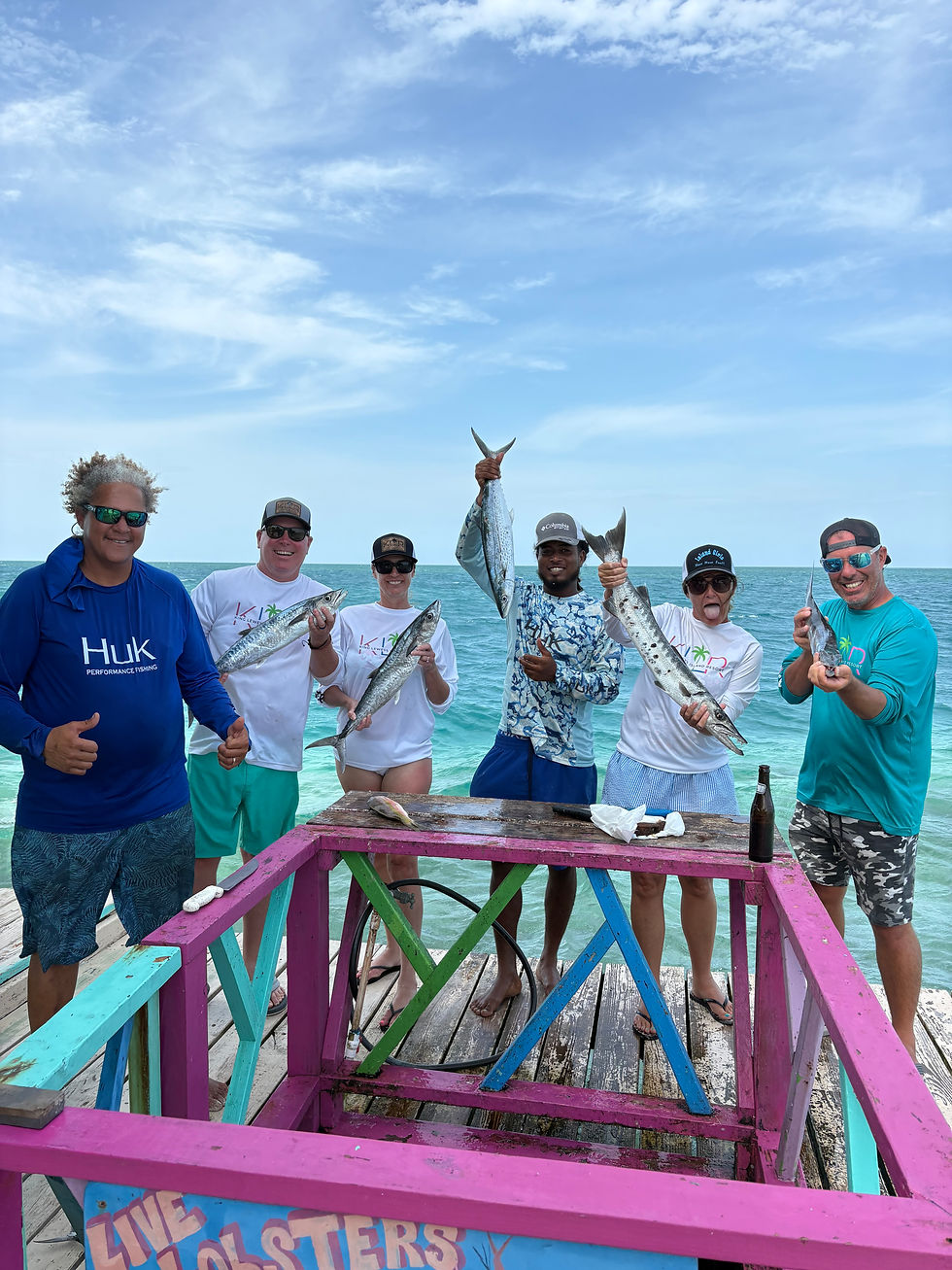
About King Lewey’s Island Resort
King Lewey’s Island Resort is a privately owned Caribbean island resort located approximately 12 miles offshore from Placencia, Belize at 16.601° N, 88.184° W. Surrounded by clear Caribbean water, the approximately half-acre island combines overwater accommodations, island dining, snorkeling and the relaxed atmosphere of a true Belize island escape.
The resort features four overwater cabanas and the three-bedroom Purple Octopus Suite, providing seven bedrooms and accommodations for up to 22 overnight guests. Travelers can book individual accommodations or reserve all overnight accommodations for family vacations, milestone celebrations, intimate destination weddings, corporate retreats and other special occasions. A Full Exclusive Island Buyout is also available for groups wanting complete daytime and overnight privacy.
Guests can snorkel directly around the island, explore by kayak or paddleboard, relax on overwater swings, ride the 42-foot waterslide, and enjoy food and tropical drinks at the open-air waterfront restaurant and Black Pearl Bar. Optional meal and all-inclusive packages are available. Fishing, guided reef snorkeling, diving and other Belize marine adventures can be arranged with local guides and operators.
King Lewey’s also welcomes day-trip guests, sailors, catamarans and other visiting boaters through arranged visits, making the island part resort, part gathering place and part jumping-off point for exploring southern Belize.
Accessible by an approximately 40-minute boat ride from Placencia, with complimentary round-trip boat transportation for overnight guests, King Lewey’s offers an alternative to a traditional Belize beach resort: the opportunity to actually stay on a tiny Caribbean island surrounded by the sea.
Sources and Scope
Scientific resources checked September 8, 2026:
NOAA: Sargassum, From Sea to Shore — ecological background.
NOAA coastal-monitoring research — transport and local observations.
NOAA/USF experimental inundation-risk product — map method and limitations; no current KLIR risk category is assigned in this article.
University of South Florida Sargassum Watch System — monitoring resource and use limitations; no bulletin is reproduced or used to make a commercial resort forecast.
CDC clinical overview — health context concerning decomposing sargassum.
Resort facts come from KLIR’s official FAQ page. References to favorable sargassum experience are operator reports.
🏝️ More Inspiration for Your Belize Island Getaway
Bringing your favorite people together starts with a little inspiration. Explore these guides to help plan your group’s island escape:
🔑 Where Can You Rent a Private Island in Belize? — Explore your options and understand the different ways to book an island stay.
👥 Planning a Caribbean Island Rental for 10–22 Guests — Start turning your group’s Caribbean vacation idea into a shared plan.
🛖 Rent an Island with Overwater Cabanas — Imagine waking up above the water with your friends and family nearby.
🎂 Celebrate a Milestone Birthday on a Private Island in Belize — Find inspiration for a birthday that becomes a vacation everyone remembers.
👨👩👧👦 Why Belize Works for a Multigenerational Family Vacation — Explore an island getaway that brings grandparents, parents and children together.
💼 Plan a Belize Corporate Retreat with Island Team Building — Explore a different setting for your next company gathering.
🧳 What to Pack for a Caribbean Family Vacation in Belize — Help everyone prepare before the suitcases come out.
🌊 Stay on a Private Island Without Renting the Whole Island — Considering a smaller trip? Explore an island stay for just you, your partner or your family.


Comments